Do You Really Need a 4x4 in Morocco? The Truth About Agafay, Desert Pistes & High-Clearance 2WDs

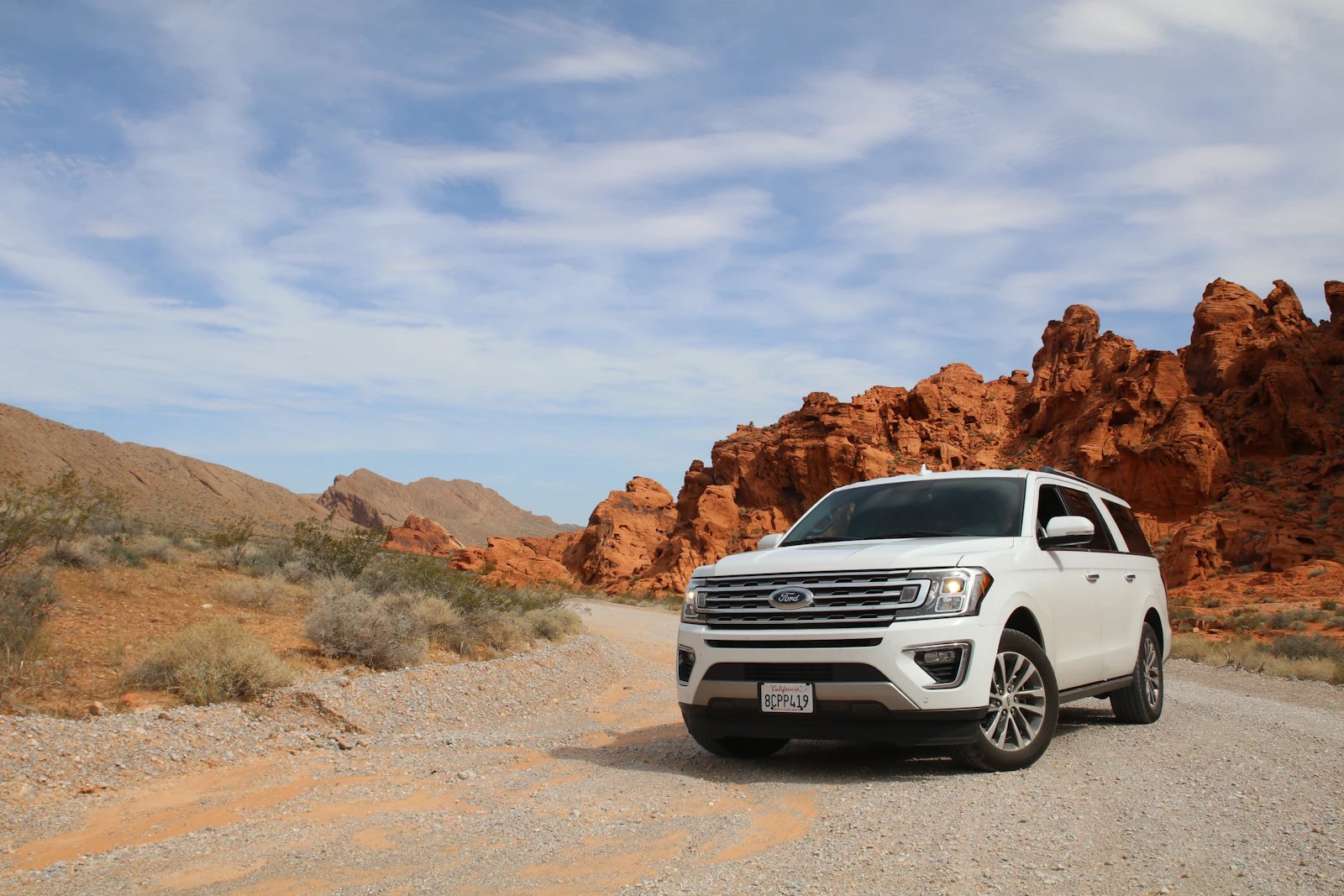
No, 95% of tourists do not need a 4x4 in Morocco. Major routes—including the Tizi n'Tichka pass (N9), Merzouga (N13), and Todra Gorge—are fully paved. For the Agafay desert and hotel pistes, ground clearance (175mm–210mm) matters far more than 4WD traction. A 2WD Dacia Duster or Sandero Stepway handles 90% of tourist tracks, saving you 650–900 MAD (€60–€85) daily while avoiding voided rental insurance contracts.
1.The Clearance vs. Traction Paradox: Why 210mm Beats 4WD
The single greatest misconception among travelers researching do you need 4wd morocco is conflating off-road traction (4x4/AWD) with vertical ground clearance (garde au sol). Over the last decade, Morocco’s Ministry of Equipment and Water has executed an aggressive paving campaign across the High Atlas and pre-Saharan regions. The infamous Tizi n'Tichka pass (Route Nationale 9 connecting Marrakech to Ouarzazate) has undergone a massive 1.8 billion MAD widening and resurfacing project. The road to the foot of the Erg Chebbi dunes in Merzouga (RN13 and R702) is 100% sealed asphalt.
Where drivers actually encounter unpaved surfaces is during the 'last mile'—the 1 km to 5 km gravel access tracks (pistes) leading from the main highway to boutique kasbahs, eco-lodges, or desert camps, alongside occasional roadworks deviations where flash floods (oueds) have damaged culverts.
On these hard-packed, limestone-strewn Moroccan pistes, a four-wheel-drive transfer case does virtually nothing for you. Your enemy is not mud or deep sand; it is sharp river rocks, dry washboard ruts (tôle ondulée), and steep concrete culvert transitions that rip open low-hanging oil pans (carters d'huile) and shatter plastic bumper valances.
| Vehicle Model | Drivetrain | Ground Clearance | Approach Angle | Daily Rental (MAD / EUR) | Piste Capability |
|---|---|---|---|---|---|
| Peugeot 208 / Clio 5 | 2WD (FWD) | 125–135 mm | ~14° | 250–350 MAD (€23–€32) | Zero (Asphalt Only) |
| Dacia Sandero Stepway | 2WD (FWD) | 174–201 mm | ~18° | 320–420 MAD (€30–€39) | Light Gravel / Hotel Access |
| Dacia Duster (4x2) | 2WD (FWD) | 210 mm | 30° | 450–600 MAD (€42–€55) | High (Agafay / Hard Pistes) |
| Dacia Duster (4x4) | 4WD Lock | 214 mm | 30° | 650–800 MAD (€60–€74) | Severe Mountain / Loose Scree |
| Toyota Prado TX | 4WD Low | 220 mm | 32° | 1,300–1,800 MAD (€120–€165) | True Off-Road / Erg Chegaga |
As the forensic comparison above illustrates, stepping up from a standard city hatchback (130mm clearance) to a 2WD Dacia Duster (210mm clearance with a 30-degree approach angle) gives you 95% of the physical geometry required to clear Moroccan terrain, at less than a third of the cost of a heavy body-on-frame 4x4 like the Toyota Prado.
2.The Agafay Desert Audit: Can You Drive There Without a 4x4?
Search queries for agafay desert without 4x4 and faut il un 4x4 desert agafay maroc spike year-round because marketing photos make Agafay look like the Sahara. Forensically, Agafay is not a sand desert (erg); it is a sterile, undulating expanse of compacted clay, limestone, and river cobbles (reg or hamada) located 35 km southwest of Marrakech between Tameslohte and Lalla Takerkoust.
The Anatomy of Agafay Access Tracks
Agafay is bisected by paved provincial roads—primarily the P2013 (via Loudaya) and the P2009 (via Lalla Takerkoust). From these asphalt arteries, roughly 40 luxury camps (such as Inara Camp, Terre des Étoiles, White Camel, and Scarabeo Camp) branch off onto unpaved tracks ranging from 800 meters to 6 kilometers in length.
1. Dry Season (May to October): The clay tracks are baked to the hardness of concrete, though heavily corrugated with washboard ruts (tôle ondulée) created by quad bikes and supply trucks. Any vehicle with at least 175mm of clearance—such as a Dacia Sandero Stepway or 2WD Dacia Duster—can easily reach 90% of the camps without engaging 4WD, provided you maintain a strict maximum speed of 20–25 km/h to protect the suspension struts and tire sidewalls. 2. Wet Season (November to April): When winter rains hit the Haouz plain, Agafay’s clay soil absorbs water poorly. Dry riverbeds (oueds) flash-flood within 20 minutes, and the compacted clay turns into slick, soapy mud. Furthermore, deep ruts form that will immediately beach a standard sedan.
The Financial Reality of Camp Transfers vs. Self-Driving
If you have rented a low-clearance compact car (e.g., Hyundai i10, Kia Picanto, or standard Renault Clio) for your broader Moroccan itinerary, do not take it onto Agafay pistes. A punctured tire on limestone shale costs 800 to 1,400 MAD (€75–€130) to replace, and a cracked aluminum oil pan will trigger a full security deposit confiscation of 8,000 to 15,000 MAD (€750–€1,400).
Instead, drive your 2WD car to the camp’s designated asphalt meeting point (most camps maintain guarded parking lots along the P2009 or P2013) and request a camp 4x4 shuttle. These private transfers typically cost between 200 and 400 MAD (€18–€37) round-trip per vehicle, which is vastly cheaper than upgrading your entire week-long rental to a 4x4.
Ground Clearance: City Cars (130mm) vs Crossover (175mm) vs Duster (210mm)
Paved roads only. Risk of scratching front bumper lip or oil pan on rural speed bumps.
The smart choice for 85% of roadtrips. Easily clears tall speed bumps and packed dirt tracks to ecolodges.
30° approach angle. Effortlessly glides over rocky desert plateaus (Agafay hamada) and dry riverbeds.
3.The Legal Trap: Why Renting a 4x4 Doesn't Mean You Can Off-Road
Here is the most critical belief shift for travelers planning an adventure in Morocco: Renting a 4x4 vehicle does not legally authorize you to drive off-road.
Under the standard General Terms and Conditions (Conditions Générales de Location) governed by the Moroccan Code of Obligations and Contracts (Dahir des Obligations et des Contrats) and regulated by the Ministry of Transport and Logistics, virtually every mainstream and local rental agency includes a strict exclusion clause regarding unpaved roads (routes non goudronnées or pistes).
How Insurance Exclusions Work in Practice
Even if you pay an extra 150 to 250 MAD (€14–€23) per day for Super Collision Damage Waiver (SCDW / Rachat Total de Franchise), the contract explicitly voids all coverage if the vehicle leaves sealed tarmac. Specifically, standard policies exclude:
- *Undercarriage damage (soubassement):* Bent control arms, punctured oil pans, damaged exhaust systems, and cracked transmission casings.
- *Tires and rims (pneumatiques et jantes):* Sidewall lacerations caused by sharp flint on Atlas tracks.
- *Off-road recovery (remorquage sur piste): Standard roadside assistance (assistance dépannage) stops where the asphalt ends. If your vehicle breaks down 15 km down the Cathedral Imsfrane track, private flatbed recovery back to a paved road will cost you 2,500 to 5,000 MAD (€230–€460)* out of pocket before official insurance tow trucks even touch the car.
Forensic Telemetry Auditing
Since 2023, over 90% of Moroccan rental fleets are equipped with real-time GPS/GPRS telematics trackers (such as Fleeti or GeoFlotte) wired directly into the vehicle’s OBD-II port and ignition relay. These trackers log exact GPS coordinates every 30 seconds alongside accelerometer G-force data.
If you crack a radiator on the unpaved Telouet track, drag the car back to the RN9 highway, and claim to the rental agency that you hit a pothole on the main road, the agency’s fleet manager will simply pull the GPS breadcrumb log. When the telemetry proves the impact occurred off-tarmac, your SCDW is voided for breach of contract, and your credit card pre-authorization (caution)—typically 10,000 to 25,000 MAD (€920–€2,300) for SUVs—is legally captured in full.
4.The 5% Exception: Moroccan Routes Where a True 4x4 is Mandatory
While high-clearance 2WD crossovers handle the vast majority of tourist itineraries, Morocco possesses severe alpine and Saharan corridors where attempting passage without a genuine 4x4 transfer case is mechanically destructive or life-threatening. Here is the forensic status of Morocco’s most famous rough routes as of 2026:
1. Erg Chegaga via Lake Iriqui (M'Hamid to Foum Zguid)
Unlike Merzouga (Erg Chebbi), where the asphalt goes right to the dunes, reaching the wild dunes of Erg Chegaga requires traversing 60 km to 90 km of deep fesh-fesh (talcum-powder silt), soft sand dunes, and the baked mud flats of Lake Iriqui. Requirement: Heavy-duty 4x4 with Low Range (Toyota Prado TX or Mitsubishi Pajero) and deflated tires (1.2 to 1.5 bar). A 2WD Duster will bury itself up to its axles within 15 minutes of passing M'Hamid el Ghizlane.
2. The Jbel Saghro Crossing (Tizi n'Tazazert Pass)
Connecting Nekob to Boumalne Dades across the volcanic anti-Atlas mountains, the Tizi n'Tazazert pass sits at 2,283 meters. While northern sections near Tagdilt have seen sporadic grading, the southern switchbacks remain unsealed, narrow, and littered with sharp volcanic basalt. Requirement: minimum Dacia Duster 4x4 (using 4WD Lock on steep hairpins) or Toyota Prado.
3. The Dades-Todra Gorge High Link (Agoudal / Msemrir Loop - R704)
For years, the R704 connecting the upper Dades Valley (Msemrir) to the Todra Valley (Tamtattouchte) via the 2,700-meter Tizi n'Ouano pass was a notorious 4x4-only track. Recently, paving crews sealed the majority of this corridor. However, winter snowmelt and autumn flash floods routinely wash out 200-meter sections of asphalt, leaving steep, muddy river crossings and loose shale bypasses. Requirement: In dry summer months, a high-clearance 2WD Duster can pass with extreme caution; between October and May, a 4x4 is mandatory.
4. Cirque de Jaffar (Midelt to Imilchil)
The classic lower gorge route of the Cirque de Jaffar is impassable to standard vehicles and requires rock-crawling capability. Even the newer higher bypass track features severe washouts, deep clay ruts after rain, and steep gradients. Requirement: True 4x4 with high articulation.
5. High Atlas Winter Snow (Ifrane, Michlifen, Oukaimeden)
Between December and March, temperatures in the Middle and High Atlas drop to -10°C. Moroccan rental cars are fitted exclusively with summer tires (pneus été). When snow blankets the N8 around Ifrane or the climb to Oukaimeden, the Ministry of Equipment sets up Gendarmerie Royale checkpoints (barrages de neige) that physically block 2WD vehicles lacking snow chains.
5.Mechanical Survival Guide: How to Drive High-Clearance 2WDs on Pistes
When you book a high-clearance crossover like a Dacia Duster or Dacia Sandero Stepway and need to navigate a 3 km unpaved hotel access track in Agafay, Skoura, or Ouarzazate, your driving technique determines whether you arrive intact or on the back of a flatbed truck.
Step 1: The Tire Pressure Protocol
Rental agencies in Marrakech and Agadir chronically over-inflate tires to 2.5 or 2.8 bar (36–40 PSI) to reduce rolling resistance and tread wear on highways. When a tire inflated to 2.8 bar hits a sharp limestone rock on a piste, the rubber has zero flex; it pops like a balloon.
- If you are only driving a short 2 km hotel track, leave the pressure alone and drive at walking pace (10–15 km/h).
- If you are driving a longer 15 km gravel road (such as the Oasis de Fint access near Ouarzazate), drop your tire pressure slightly to 2.0 bar (29 PSI) so the tire tread absorbs sharp stones. Crucial rule: You must re-inflate back to 2.3 bar at the very next Afriquia, Shell, or TotalEnergies station (tip the attendant 5 to 10 MAD). Driving at 100 km/h on hot asphalt with under-inflated tires will cause catastrophic sidewall heat failure.
Step 2: Straddling the Ruts (Chevaucher l'Ornière)
Never drive with your wheels inside the deep tracks left by heavy trucks. Those tracks lower your car’s belly by 10 to 15 cm, ensuring the raised center ridge of rocks (le bombé central) smashes directly into your oil pan. Always position your left or right tires directly on top of the center ridge, keeping the lowest point of your engine bay suspended over the deeper rut.
Step 3: Defeating Washboard Corrugations (Tôle Ondulée)
Agafay tracks are famous for violent rhythmic ripples. Tourists often read off-road myths claiming you should 'speed up to 60 km/h to float over the bumps.' Do not do this in a 2WD crossover. At 60 km/h on washboard gravel, a front-wheel-drive car loses steering contact with the ground, the ABS braking system goes completely blind (increasing stopping distances by 300%), and the standard hydraulic shock absorbers will overheat and blow their seals within 10 kilometers. Creep over washboard sections in 1st or 2nd gear at 15–20 km/h.
Step 4: Inspect the Spare Tire Before Leaving the City
Before signing your rental agreement, open the trunk floor (or inspect the under-chassis winch cradle on 4x2 Dusters) to verify that the spare wheel (roue de secours), scissor jack (cric), and lug wrench (clé démonte-roue) are physically present and that the spare holds air.
Automotive Mechanical Specialist & Fleet Damage Inspector
Automotive mechanical inspector in Casablanca and Tangier. Expert in drivetrain tolerances for Moroccan mountain tracks, bodywork forensic appraisal, and deposit return disputes.
Common Questions About Do You Need a 4x4 in Morocco?
Can you drive to the Agafay desert without a 4x4?
Yes. The main routes through Agafay (P2013 and P2009) are paved. Only the final 1 km to 5 km tracks leading into individual luxury camps are unpaved compacted clay and stone. In dry weather, a high-clearance 2WD crossover like a Dacia Duster or Sandero Stepway (175mm–210mm clearance) handles these tracks easily at 20 km/h. If you rent a low city car (Peugeot 208/Clio), park at the camp's asphalt meeting point and pay 200–400 MAD (€18–€37) for their 4x4 shuttle.
Do I need a 4x4 to drive from Marrakech to Merzouga (Sahara Desert)?
No. The entire 560 km route from Marrakech to Merzouga via the Tizi n'Tichka pass (N9), Ouarzazate, Boumalne Dades, Tinghir (N10), and Erfoud (N13) is 100% paved asphalt. You can drive a standard 2WD compact car right to the edge of the Erg Chebbi sand dunes, where all desert camps provide secure paved parking and included 4x4 or camel transfers into the dunes.
What is the difference between renting a Dacia Duster 4x2 and 4x4 in Morocco?
Both models offer virtually identical ground clearance (210mm vs 214mm) and approach angles (30 degrees), which is what prevents undercarriage damage on rocky hotel tracks. However, the 4x4 version adds an electronically locking rear differential and deeper 1st-gear crawl ratio, costing roughly 200–250 MAD (€18–€23) more per day. Over 85% of rental Dusters in Morocco are 4x2 models unless you specifically reserve a guaranteed 4x4 category.
Does Moroccan rental car insurance cover unpaved pistes if I rent an SUV?
No. Standard rental contracts and even Super CDW (zero-excess insurance) explicitly exclude driving on unpaved tracks (pistes), regardless of whether you rent a 2WD sedan or a Toyota Prado 4x4. Undercarriage damage, oil pan punctures, and tire sidewall cuts incurred off-tarmac are 100% the renter's financial liability, enforced via onboard GPS telemetry trackers.
Is a Dacia Sandero Stepway enough for Atlas Mountain roads and Ouarzazate?
Yes, the Dacia Sandero Stepway is arguably the best value-for-money rental car for Morocco. With 174mm to 201mm of ground clearance (depending on the generation), it sits 40mm higher than a standard Peugeot 208 or Renault Clio. It effortlessly handles steep Atlas highway gradients, roadwork gravel detours, and short unpaved kasbah driveways around Ouarzazate and Skoura while consuming only 4.8L/100km of diesel.